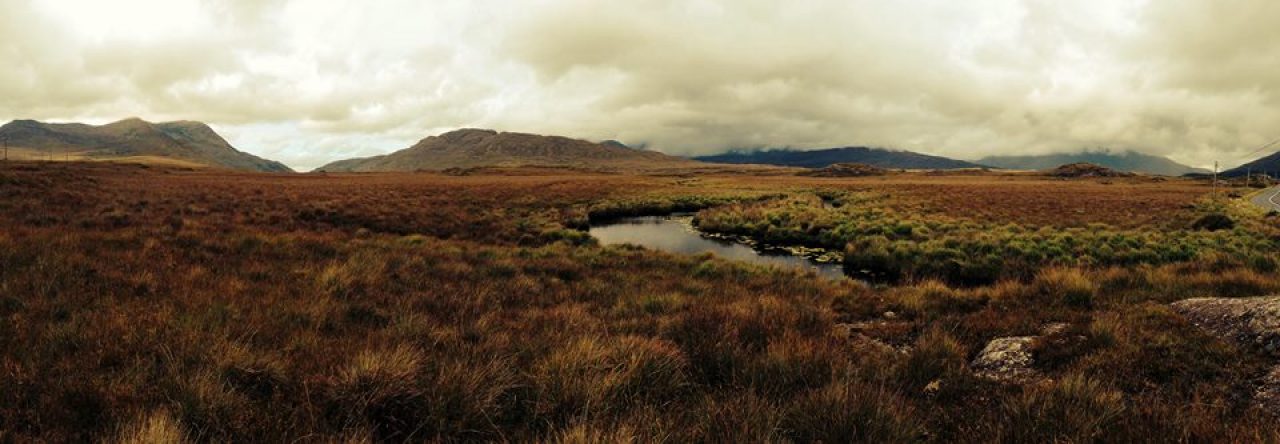
I prefer long drawn out sentences
over short ones.
I prefer evergreens.
I prefer mountains.
I prefer the clarity that comes with honesty
to the anxiety that comes before the candor.
I prefer rain to sun.
I prefer dirt.
I prefer frank cussing to polite lies.
I prefer the love of Christ to the discord of Paul.
I prefer a cat’s cool, committed love
and also a dog’s own energetic version.
I prefer someone else cooking.
I prefer wild and abnormal to the checking off of boxes.
I prefer looking someone in the eye.
I prefer sunrises.
I prefer strong to thin.
I prefer Maya to William.
I prefer being warm within the cold to being cool within the warm.
I prefer my own coffee.
My dear Sister in Law, Erin, introduced me to so many wonderful artists since we met, Maya Angelou being the most influential. Tonight, she introduced me to Wislawa Szymborska and her poem translated from Polish to English as Possibilities. Erin wrote her own version and invited her own readers to do likewise. Thank you for all the beauty you’ve brought into my life both through our shared love of art as well as your own beautiful soul.
Author: Tribal Queen
Navigating the world, attempting authentic love of everyone I encounter, and breathing in as much of the world as possible before I leave its beauty.
The Potential in 27 Hours
I sit in my too-short tub,
lavender epson salts soaking into my body
my stomach is knots
and the best of my work is the breaking down of possible scenarios
The What Ifs are my realm.
But like a dog, I spin, trying to catch all these possibilities
snapping only into air, their answers evade me and
the pain in my stomach remains unsatiated with the continued possible potential.
My obituary
I always described myself as a “worst case scenario” kinda girl. It started as a nurse since seeing trauma every day takes its toll. Combined with regular mass shootings here in America, 9/11, my brother’s description of his own war experiences, I assume something bad will happen everywhere I go. An obese man walking down the street? The rules of CPR for outside a hospital run through my brain as I pass on the sidewalk. Hiking up a mountain? Would I be able to hike off with a broken hip that I’m going have when I fall? If an active shooter barged into my church, would I have an escape route? See the pattern? First responders, military, and health care providers are trained like athletes and musicians. Practice doesn’t make perfect. Perfect practice makes perfect. We run practice code blues in the hospital. I study constantly, updating myself on new procedures, research studies, and
Life is anything but certain.
In fact, life in its definition I would claim, is uncertainty. Any action we take, any choice made can alter, blow up, or end our lives. That does not mean we stop the actions. We don’t stop the choices and ball up. We live, damn it. We live every second of every day to the best of our ability. We experience life. We connect with others. We love. We allow ourselves to be loved.
I promise I’ll have regrets on my deathbed, but I hope and pray I’m living my life to minimize those regrets to the best of my ability. I want my obituary to read that I didn’t know everything, but I lived and loved the best I knew. And when I learned better, I did better, I lived and loved better.
The Pokey Green Monster Visits the ICU
Note from the author: If you’re unfamiliar with the Pokey Green Monster series, please scroll to the beginning of my blog and read his introduction and other stories to better understand this fictional personification of Anxiety and Depression. My goal is to give labels and words to this pain myself and many others experience so as to take back the power it took from me. I know writing them has helped my own path, I only hope it helps others to read it.
My work is too fast paced for the Pokey Green Monster. He can’t keep up on his short legs. Usually. To my surprise, he followed me from my car, through the parking lot, up all the stairs, and into the ICU today. His scrawny legs pushing and sprinting up the stairs to keep up with me. I walked faster. He matched my speed. His eraser-worn pencil now gone, probably in his belly pouch, is replaced by a bobbing bucket. He swings it as he walks, whistling an annoyingly happy tune. It’s empty.
He sits on a filing cabinet while I take report on my patients, kicking his feet with the bucket between them, still whistling. I ask the night nurse to repeat what she just said as the bucket repeatedly lightly taps the filing cabinet. Why did he follow me here? I thought the Rules of Engagement were pretty well laid out prior to this. I go to work to focus on my patients, not myself, not my pain, but rather on their pain. That focus on others always blocked this Pokey Green Monster’s entry to the hospital. How dare he break those rules. How dare he step onto sacred, safe ground.
As I plan my day with the patients, when to give meds, imaging studies timing, lab draws, and contemplate this betrayal by my enemy, I realize he’s gone. He’s plodded off the unit with his bucket and his incessant whistling. Thank goodness. He finally got the clue of his own indecency.
As I walk through the sliding door of my first patient’s room, I realize he’s walking next to me, the bucket no longer empty, but sloshingly overfull with water. He emptied the bucket of its contents in the patient’s room, and promptly walked out. My feet step in the water and my sock soaks through.
Well, at least it’s luke-warm water.
I assess my patient, readjust them in the bed so they don’t form pressure ulcers, clean their mouth around the ventilator, listen to their lungs, heart, and abdomen, administer medications, adjust drips, do all the things. The entire time, my feet walking in water.
The Monster is back. His bucket swishing again, and again, he empties it on the floor. He repeats this over and over, the entire time I’m in my patient’s room. By the time I leave, the water is up to my calf and I am slowed in my walking through the liquid.
As I walk out of the room, the hallway is lit, there is no water here, and I move freely. I quickly walk to the med room and pick up what my next patient needs. My mind cleared. The Monster plodding off with the empty bucket down the hall.
This is all repeated in my next patient’s room. Again, water up to my calf, slowing all my movements.
I sit at the computer to chart my assessments, my Is&Os, my vitals, everything anyone could ever want to know about either of my patients at this given moment. I focus on the computer and it takes about half way through the first patient’s chart to realize there is water sloshing up against my feet. The Monster has begun his filling of the hallway while I chart.
My coworkers come by, asking if I need any help with anything that morning. They are walking freely, oblivious to the two feet of water covering the floor. No, I’m good. Just need to chart before the scheduled MRI.
When transport comes to help me take my patient downstairs, I can barely move my legs, the water up to my waist. I help with the ventilator and IV pole while my coworker pushes the bed. Once we come out of the ICU, I am able to move more quickly, leaving the now pond of a unit behind us. The motorized bed moving too quickly for the monster to keep up.
When we return to the unit, the water is higher, he continued his work while I was gone. The water now up to my chest makes it difficult to breath. The doctors rounded while I was gone and there is a list of tasks to complete now. I wade through the water, I will accomplish them if it kills me.
By evening, my chin is touching the top of the water and I can barely function. My body is tired from pushing against the water. My mind is tired of seeing others walk freely through it like nothing is there. Everything is slowed. Everything is muted. The water pushing and pressing on me from every direction. As I give report to the new night nurse, I am completely submerged, speaking slowly, my mind also submerged and slow alongside my body.
As I walk off the unit, out of the hospital, the water rushes out of the doors as I open them. My mind clears, my body, still soaking wet, moves faster, out into the crisp dark air. I am cold. The Monster plods behind me to my car. He hands me a towel when we get home. I dry myself. I fall asleep in my bed, and do it all again tomorrow.
Something is on the Tracks
I don’t open up much to my patients. Three, to be exact, in my eight years of nursing, that I’ve shared with personally, who I’ve opened up to show my own humanity. Today, I had the honor to meet that third patient. She is kind. She is smart. She is engaging. She is helpful. She is gracious. She’s also a Nationals Fan. So, even on the night the Cards were swept out of our Series run, I sat by her bed talking about Frank Robinson and exclaiming at stellar pitches or close calls.
We bonded over Little Toot, our favorite children’s book, and our mutual experiences (and love!) of working in libraries. We swapped stories of meeting famous broadway stars and New York Times writers. We spoke of beauty. We spoke of awe-inspiring experiences. We shared our lives with each other. We shared our humanity with each other.
On my drive home, I wept for this woman. I wept for the connection we made, the humanity we shared. I wept over her decision to buy plane tickets to Barcelona instead of buying chemo treatment. I wept tears of gratitude for her.
As I crawled into bed with an episode of Downton Abby, I came across a scene in which Mrs Crawley exclaims at Mary’s new nursing skills while taking care of Matthew. Mary responds with a general, oh, he’s family, it’s nothing. And Mrs. Crawley responds with, “It’s the opposite of nothing.”
And here I am, weeping again. Because human connection is exactly that, the opposite of nothing, it is everything. It is worth giving up everything. It is paramount to our existence. It is, in fact, the only way towards survival.
Joy and heartbreak come together as railroad tracks, running along side each other, while our lives travel on top towards our destination.
Alignment
Travel nursing is great. Like really great. And know, when I say this, that includes the fact that I don’t actually like being a nurse. There are pros and cons to the job, but overarchingly, I’m not a fan. If I could redo my career, I’d study ecology or forestry. But travel nursing makes an OK career great. It allows me to do, not all, but a good chunk of things I love and my life is balanced once again.
One of the downsides to traveling is that your life is rather hectic. If you want a calm, predictable lifestyle, agency and travel nursing is not for you. Deadlines, competency testing, drugs tests, moving, living out of your car, and change, constant change with no consistency becomes your life. The focus becomes on survival. And I love it. It keeps me on my toes. It keeps me in the zone.
But sometimes Survival is arduous.
My goals. My beliefs. My standards. They all suffer when Survival becomes priority. I took this past week to refocus on those. I had to dig deep to figure out both the Survival part and the GBS part (Goals Beliefs Standards).
When I’m not travel nursing my life away, I quickly feel stuck in a rut, in a box, a box with walls I both don’t want in the first place and also can’t break. But I knew the longer my focus remained on the survival, sooner than later, I would be stuck in a similar box with similar unbreakable walls.
So while these are personal and I am honestly not looking for feedback or affirmation from any of my limited readers, here is my statement of alignment. Here I am, placing the Survival inside the GBS. The alignment of beliefs and actions. I write them down to make them real. I publish this to hold myself accountable to my beliefs.
Stabilize My Life
1. My relationship with God:
-Pray formally at least twice a day.
-Remember God more often.
-Thank God for food, life, good things.
-Read the Bible daily.
2. My relationship with others:
–See people for who they are, not what they can do for me physically or emotionally.
-Help someone daily. Help them with something THEY need or want, not what I think is good for them.
3. My relationship with myself:
-Practice and cultivate gratitude.
-Practice and cultivate joy.
-Make healthier decisions for my body and for my soul
Within these new stabilizers I have given up beef and other red meat. I have stopped drinking alcohol. I read during my lunch breaks instead of scrolling through my phone. I wake up at the same time every day. I finish my day by writing at least three things I’m grateful for. I pray. I go to the gym after work. I hike and rock climb every day I’m off work.
Within the two weeks of working on these, and I am more alert and aware. I am happier. I interact with others more honestly. I understand my own needs and wants more clearly. I am able to focus on the GBS more acutely. I am more me. I am more of the me I want to be.
My Grandmother’s Education and Mine.
My paternal grandmother studied nutrition. In the 1930s and
1940s, teaching, homemaking, and nursing, were really the only options. My
aunt, also a nurse, mentioned to me recently that she didn’t know until she
helped her mother write her memoirs, just how much of her life, all of her
life, it seemed to my aunt, revolved around clothes and food. She made the
clothes for her children. She fed her family, and damn, she was going to make sure
they ate as healthy as modern science could teach us. Unfortunately for my Dad,
that meant liver at least once a week. Thankfully, we’ve figured out how to get
our iron efficiently enough without my parents’ generation overcooking liver
once a week and I am grateful for that scientific knowledge.
Clothes and Food.
I don’t think I can claim either of those interests alongside my grandma.
Knowing her later in life, she was well-read, well-spoken on numerous topics
like education, music, politics. She was active on boards of nonprofits. She helped
form music programs for both children and adults. She’d travelled all over the
world. And that is one of the attributes I really clung to of my grandmother.
She travelled so she could learn. She wanted to learn about people, get to know
the people, their culture, and their thoughts.
Clothes and Food.
I wish I could ask her, “was there something else you wanted to study in college?”
Part of this question comes simply because I am reading Virginia Woolf’s A Room of One’s Own for the first time. She posits the theory that historically, women have not had financial or physical freedom to gain an education and have uninterrupted time to develop their gifts, such as writing or painting.
My mother’s office is the thoroughfare to my parents’ bedroom. My dad used to use that as his office, but when the kids slowly moved out, he commandeered one of our old rooms as his office. My mother could do that. No one would blink if she did. I know she usually reads my blog though, so watch out for a comment below. There may be a good reason for it. But it seems a hectic place, it seems a place that one can’t close the door and think or study.
As a parent, either male or female, I think you lose that ability, the space, the room of one’s own. But I also believe it’s important to fight for and maintain that space for ourselves. A place to think, to work, to write, to create.
One of the struggles in my relationship with my now deceased
grandparents, was that when I announced I would be studying music history after
highschool, they told my parents to make me major in something “useful.” After
ending with a degree in music business, I went to nursing school. I think that’s
what they meant. Something useful. I think music is more than useful, but that’s
another blog post. I am grateful my parents stood by my side both literally and
financially in my musical studies. I am a better person because of that
training and education. I truly believe the experience makes me a better nurse.
Read that again. Music and liberal arts training has made me a better nurse.
But I still wonder, given the financial backing, the emotional backing, by her
parents and by society, would my grandmother have studied something differently?
How many women would have studied something differently?
My brother made an interesting comment about the scouting experience of his children recently, in that through scouts, they see other options for careers than teacher, mailman, accountant. (The teachers at their school, my brother works for the post office, and his wife is an accountant.) What someone is exposed to makes their decisions for them. It truly is a cycle. After my music degree, I felt lost. I looked around at people in my life, friends, family, who were happy, and most of them were nurses. I’m grateful for my medical training and the experiences I’ve had as a nurse, but if I knew then what I know about myself now, I wouldn’t have gone to nursing school. I would study ecology or biology. (Part of that is my insecurity with math and science throughout college. I always thought I was “bad at math” when in reality, I think about numbers differently than most teachers teach about numbers. This began in 1st, I repeat, 1st grade. I remember having panic attacks thinking about math class as early as age 7. And this spread through math and science and lasted well in to my adult life. I love science and math. I am actually good at it. And if I had realized that at a younger age, my life would look very different. Encourage girls in STEM. We need all the help we can get.)
What we see around us is normal and accepting. What we are encouraged in, we thrive in. Those freedoms are very much founded in the physical and financial abilities such as having a place to study in uninterrupted. Provide and encourage—our world will be better because of it.
Clicks, a poem of sorts
I have flown over your home twice since that day. Since that day you told me you wanted to know how my brain worked. Staring at the mountains below the wings on this plane, I long for them. I don’t long to hike them, I long to hike them with you. But the only part of your heart I’m allowed is the instagram heart on each of my photos.
A like. A simple click. An acceptance of our words and a denial of them.
The Mother
I am not a mother. I am a Godmother times five and I love those children (and one adult!) so much. But I did not birth them. I did not hold them in my body for nine months until they were ready to breath the air of our world. I do not feed them, change their diapers, correct their actions, or raise them in any other fashion. So, as much as kind friends include me in the Mothers’ Day celebration, I am not a mother. So my post begins with that caveat. I am no mother, so I know even the gut wrenching emotion I feel about this topic, is not the fullness of a mother’s.
What feels like decades ago, I worked briefly in the emergency department at an Oklahoma City inner city hospital. We had a patient brought in by ambulance, power and light worker, who’d been electrocuted on the line, and who’s heart EMS had restarted in the field. He was in and out of stability and I remember doing at least one more round of CPR on him before we were able to stabilize him. His mother showed up shortly after that. We had all finally been able to slow down when someone turned and there she was, a look of horror on her face. The room, a disaster, her son, with a tube down his throat, and lines sticking out from every direction. I don’t think we’d even had time to cover him up. But he was alive. The room’s normal din sank into silence.
No one stepped towards her.
No one said…anything. Someone needs to say SOMETHING. Anything. I’d been in the ER for three months at this point, it’s not my place, but hot damn, the silence crept on and no one stepped up. I’d seen the look on her face before. It’s the same look family members had when they saw their loved ones in the burn ICU for the first time. That horror. That questioning horror, but unwillingness to ask that desperately needed question: Did they survive?
I finally grabbed her hand, guiding her to his side, explaining that we were breathing for him, that his heart had stopped, but we got it going again, that he was going to the ICU and that it would be a long recovery. I blathered on for a bit, placing her hand on his now restrained hand, and she had to choke out her question twice before I understood her. “Is he alive?”
“Yes, your son is alive.”
She almost collapsed on the floor, sobbing, and thanking us, thanking God, or thanking the universe, I couldn’t hear. The only recognizable words being “thankyouthankyouthankyou.”
I am no mother, but I was given the awesome and beautiful opportunity to tell that mother that her son was alive.
Beholding her own Lamb led to the
slaughter, Mary, the Ewe-lamb, followed with
the other women, in distress and crying out:
“Where do You go, my Child? Why do You run
so swift a course? Surely there is not another
wedding in Cana to which You now hasten to
change water into wine? Shall I come with You,
my Child, or shall I wait for You? Give me a
word, for You are the Word. Do not pass me
by in silence, You who kept me pure,
for you are my Son and my God.
This is from a service in the Orthodox Church called Lamentations, or the Matins for Holy Saturday. It’s sung on Friday evening, and is the funeral service for Christ after he’s been taken down from the cross. Throughout the services on Friday we hear a conversation between Christ and His mother Mary (The Orthodox use the Greek word Theotokos, which literally means the Birth Giver of God). Even from the cross, He comforts her. Through the gospel readings, we know He made sure she was cared for by John, even as He hung on the cross, dying in front of His close friend and mother.
A mother, watching her child die. A mother, watching her innocent child, die a slow, painful death of unjust punishment.
An unnatural mother, watching her only son, but not only her son, but her Lord and Savior, die. She watches her son, she watches her God, die.
Have you ever felt panicked? Like, you don’t know which way to turn, what to do next, totally turned upside down, disoriented, and unable to control yourself? Sometimes that shows as hysteria. Sometimes that shows as absent staring off into space. Sometimes that shows and uncontrollable sobbing.
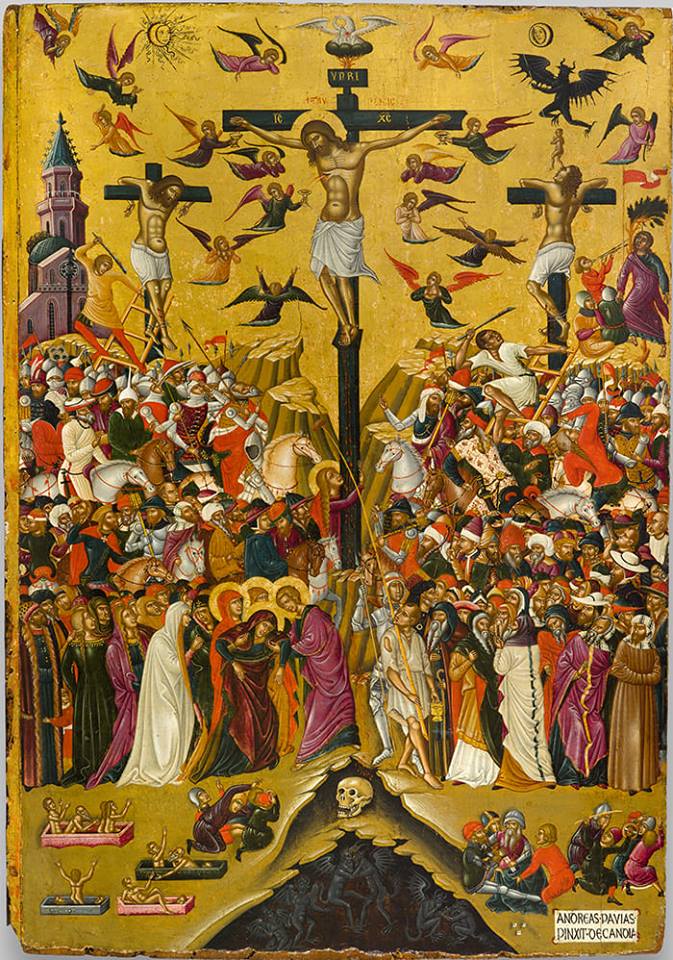
The Theotokos is the one in deep red at the foot of Christ and His cross being held up by other people. This woman can literally not stand on her own from pain. I love this icon because it shows the hectic and crazed mob that surrounded Christ that day. Thanks to Patristic Nectar Publications for this icon
My favorite hymn, hands down, no questions asked, is The Angel Cried which we begin singing Pascha (Easter) night, so Saturday night. It’s so great that I’ve gotten into a full blown yelling match with my one Orthodox boyfriend over it because he *didn’t* like it. (Big red flag, folks! We obviously didn’t make it very far.) He said it was “too emotional.” Well, Christ cried tears of blood, threw over the tables in the temple, wept tears for Lazarus, and cried in despair on the cross, so I think our emotions have been sanctified along with the rest of our humanity when God became man.
The Angel cried to the lady full of grace
Rejoice, rejoice, O pure Virgin,
Again, I say, Rejoice!
Your son is risen from His three days in the tomb.
With Himself He has raised all the dead,
Rejoice all you people!
Shine, shine, shine, O new Jerusalem,
The glory of the Lord has shown on you.
Exalt now, exalt now O Zion,
Be radiant O pure Theotokos in the resurrection
The resurrection of your son.
I’d add a recording, but sorry, I’ve never heard one that does it justice. No one sings it the way I think it should be sung, and I think this post has something to do with that:
We get to tell Mary, ‘your son is alive.’ Not only her son, but her God. Not that He survived a bad accident, but that He was dead, like legit dead, and now he’s alive. We get to tell Mary that He’s not only alive, but that He conquered death, ending Hades rule over us. You may not have the chance to hold a mother in your arms when you tell her her son survived a lightning strike’s amount of electricity through his body, but you have the chance to tell another mother. “Again, I say, Rejoice!”
Death is Ugly
Death is ugly. So many times, the word “peaceful” is used, but I’m here to assure you, that death is in fact, horrifically ugly. It’s painful. It smells. It’s visceral to each of our senses. Death is ugly. The spiritual side is horrific too. The Orthodox Church believes that your soul and your body separate at death, which is the unnatural part about living in the fallen world after Adam, Eve, and that shiny apple. That separation is painful too. It’s described as a ripping away, a wrenching apart.
So there’s nothing peaceful about death.
And the repair of death isn’t peaceful either. It couldn’t be. You can’t clean the floor without dirtying the mop, right? If my patient’s heart stops, I break ribs to restart it. I force air in their lungs. I put needles in their skin, catheters in their urethra, all while literally pounding and jumping on their chest. Have you seen a picture of a hospital room after a code? It makes those Saw movies look tame.
Western Easter is this weekend, and this year, Orthodox Palm
Sunday as well. It’s when those celebrations of Christ’s resurrection fall on
the same weekend or close to each other that I dwell a bit more. I never
understood the celebration of Western Easter. It’s… pretty. I always thought
that was the tom boy in me. I don’t do pretty very well. I enjoy baseball and
hiking. Guess I’m good with dirt. But pretty? It’s never something I’ve been
good at or enjoyed much. But as a nurse, I think I’ve come to a different
understanding. Easter is a stark contrast with the Orthodox celebration, Pascha.
Easter is pastels and candy. Pascha is red and gold and meat. As a nurse, that
resonates a bit more with me. Christ died. He emptied Hades. He conquered death
itself. Death is ugly, fixing death is ugly, but the conquering of death is viciously ugly. It’s the knocking down of
Hades’ brass gates. It’s the smashing of chains. It’s the earth shaking. It’s
the sun eclipsing. It’s loud. It’s raucous. It’s deafening. It’s unapologetic.
It’s—powerful.
Every day I am faced with the power of death. I can only imagine the power of
its conqueror.
 Petrichor